Showing posts with label non-native. Show all posts

Sunday, October 6, 2013

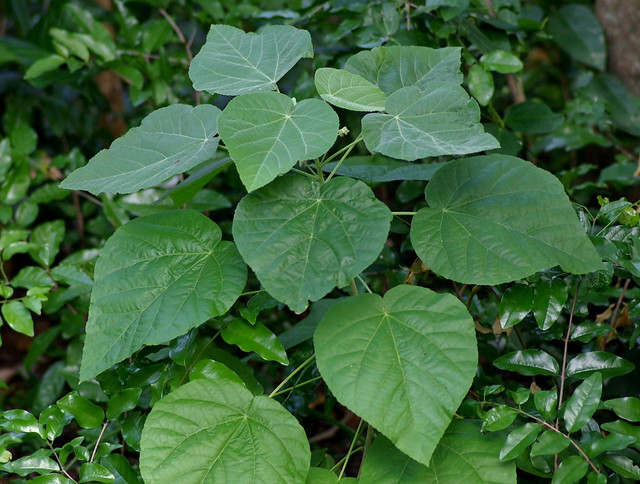
Manihot esculenta 'Variegata' – Variegated Cassava

Manihot esculenta 'Variegata' - Variegated Cassava - Variegated Tapioca
Manihot esculenta 'Variegata' photographaed at the vegetable garden of Mounts Botanical Garden, where it was being grown as an ornamental accent plant.

Image and text © 2013 Rufino Osorio

Saturday, September 28, 2013

Pentas lanceolata 'Gloria's Heirloom Pink'

Pentas lanceolata - Egyptian star flower - Pentas
Pentas lanceolata 'Gloria's Heirloom Pink'

Pentas lanceolata is an evergreen perennial or subshrub native to Africa and Yemen that is commonly used as a flowering landscape plant in frost-free areas and as an annual or houseplant in colder regions. Old-fashioned cultivars are rather large plants that grow to about 4 feet tall and wide, whereas modern cultivars tend to be more compact. Its common names are listed in a variety of references as Egyptian star flower or Egyptian star cluster, but, at least in south Florida, it is never known by those names and it is always referred to by the common name of pentas.

Pentas is very easily cultivated in well-drained but moist soil in full sun to light shade and it is easily propagated from seeds or cuttings, with the cuttings rooting easily in either a glass of water or soil. Poorly drained soils promptly lead to root rot and it struggles in excessively dry soil, thus, it is best to keep it moderately moist and to avoid extreme garden situations. It is much cultivated for the attractive flowers, which are borne throughout the year and come in shades of white, pink, red, magenta, and lavender. The flowers will last about five days when cut and placed in a vase of water and pentas is sparingly used as a cut flower and in flower arrangements.

Pentas is also highly recommended for butterfly gardens as a nectar plant. Unfortunately, modern cultivars are not particularly attractive to butterflies and, if used in butterfly gardens, one needs to seek out the large, old cultivars. One of these is 'Gloria's Heirloom Pink'. It is a selection found by the outstanding native plant gardener, Gloria Hunter, in the 1950s on the island of Palm Beach. It is a vigorous plant with bright pink flowers and in my garden it is a great favorite of honeybees and gulf fritillary, monarch, and queen butterflies. This cultivar is sparingly found in cultivation in the West Palm Beach region, mostly in the gardens of native plant enthusiasts with whom Gloria has generously shared cuttings.

Pentas lanceolata with a gulf fritillary butterfly (Agraulis vanillae)
Pentas lanceolata 'Gloria's Heirloom Pink' with a gulf fritillary butterfly (Agraulis vanillae).

Although pentas has been cultivated in the untold thousands throughout southern Florida, it has not shown invasive tendencies and it has been found outside of cultivation in Florida only in Miami-Dade County. I have seen such wild plants growing in moist, partially shaded, rocky places in Miami-Dade County but they had reverted to their wild form and were scarcely recognizable as pentas. The plants were rather spindly, wispy things barely a foot tall and with dull whitish flowers. I found this unusual since cultivated plants that revert to their wild form are usually more vigorous than the cultivated forms but these were decidedly less vigorous. Also, and perhaps the reason pentas has not shown invasive tendencies, they appeared short-lived, were never found in large numbers, and occurred in sites only where there was little or no competition from other plants.

Images and text © 2013 Rufino Osorio

Saturday, June 22, 2013

Brazilian-Pepper in 3-D

Schinus terebinthifolius - Brazilian-Pepper

Earlier this year, I photographed the fruits of the notoriously invasive Brazilian-pepper (Schinus terebinthifolius). While studying the images later that day, I realized that I could combine two of the images to make a 3-D gif. Such gifs are interesting because they achieve a 3-D effect by wiggling two images back and forth. The appeal of such gifs is that no glasses, special equipment, or effort is needed to see the 3-D effect.

Above is a regular image of the Brazilian-pepper. Below, is the same image which I have combined with a second image to produce a 3-D gif.

Schinus terebinthifolius - Brazilian-Pepper

Images and text © 2013 Rufino Osorio

The Problems with Pilea glauca and Pilea glaucophylla

Pilea glauca, Pilea glaucophylla, Pilea Silver Sprinkles

A small, trailing, groundcovering plant known as Pilea glauca is readily available on the internet. See, for example, the online store of Josh's Frogs or Pernell Gerver's online store. Other web sites list the plant as Pilea glaucophylla. The plant is both common enough and popular enough to have two common names: silver sprinkles and gray artillery plant.

There is, however, one big problem with the name, Pilea glauca. It has never been published. Although the name is in use by the gardening public, the name does not appear in any database of botanical names, including The International Plant Names Index or Tropicos. It is an example of what is known in botany as a nomen nudum, which literally translated means a naked name. In standard botanical practice, each name is tied to a type, that is, an herbarium specimen on which the name is based and each name must be legitimately published if the name is to be considered valid. However, Pilea glauca is floating around the internet completely naked, bereft of the "clothing" provided by a type specimen and legitimate publication.

The name Pilea glaucophylla has neither problem. It was legitimately published in 1936 by E.P. Killip in a publication titled Contributions to the United States National Herbarium and there is a type specimen collected by É.F. André in Colombia and deposited in the herbarium of the Smithsonian's National Museum of Natural History. Unfortunately, there's one small problem: we can search for it at the Smithsonian's NMNH herbarium website and we can see for ourselves that Pilea glaucophylla is a completely different plant than the one circulating on the internet by the name of Pilea glaucophylla.

So, what is the name of this mystery plant? I know that it is definitely not Pilea glauca since that is a nomen nudum that has never been published. And I know that it is not Pilea glaucophylla since that name refers to a completely different plant with erect stems and differently shaped leaves that are about 3-inches (7.6 centimeters) long or longer. I thought that I would never learn its name; however, thanks to the original version of this blog post and the power of the Internet, I heard from David Scherberich of the Jardin Botanique de la Ville de Lyon in France, who informed me that he knows the plant as Pilea libanensis of Cuba. Neither David nor I have confirmed that it is indeed that species by examining vouchered herbarium specimens but a preliminary search on the Internet confirms that Pilea libanensis is very likely the name of our little, silvery, carpeting Pilea.

It is easy to understand how this example of folk taxonomy came about. Pilea libanensis has silvery-green or silvery-bluish leaves that resemble in color the glaucous foliage of some landscape shrubs and trees, especially that of certain conifers. Therefore, at least until now, no one questioned the validity of either Pilea glauca, which means "glaucous Pilea," or Pilea glaucophylla, which means "glaucous-leaved Pilea," because both names aptly fitted the plant. But these incorrect names should not be used and, for now, I am referring to it as Pilea libanensis.


Note: This post was modified from its original version, published on 22 June 2013, by including information in a personal communication by email from David Scherberich dated 12 August 2013.

Image and text © 2013 Rufino Osorio

Sunday, February 17, 2013

Zeuxine strateumatica – Lawn Orchid

Zeuxine strateumatica; Lawn Orchid; Soldier Orchid
Zeuxine strateumatica growing in a lawn and living up to its common name, lawn orchid.

Zeuxine strateumatica is a small orchid native to tropical and warm-temperate regions of Asia. It is now well established elsewhere, including Puerto Rico, much of Florida, and parts of Georgia, Hawaii, Louisiana, and Texas. It readily grows in lawns and in landscaped areas covered with bark mulch. It appears to be naturally short-lived and is very difficult to transplant from the ground into a pot; however, if seed is gathered up when ripe in the spring and scattered among potted plants, a few lawn orchids will usually show up in the pots the following winter or spring.

Image and text © 2013 Rufino Osorio

Bastardiopsis eggersii – Jost Van Dyke's Indian-Mallow

Abutilon virginianum; Bastardiopsis eggersii; Sida eggersii; Jost Van Dyke's Indian-Mallow

Jost Van Dyke's indian-mallow is a highly endangered Caribbean shrub or small tree known from three islands in the British Virgin Islands and one island off the coast of Puerto Rico. An article by Fred Kraus provides very detailed information about this rare plant. The image above is of a young plant growing in a private garden in Fort Lauderdale, Florida. The plant is surrounded by numerous seedlings of black ironwood (Krugiodendron ferreum). The genus to which Jost Van Dyke's indian-mallow belongs has been a matter of some controversy and it is sometimes found listed as Abutilon virginianum or as Sida eggersii.

Plants in my garden flower in early spring (January in south Florida). The flowers are tiny but are attractive to bees and are rather pretty when examined closely.


Images and text © 2013 Rufino Osorio

Antigonon leptopus – Coral Vine

Warning: Antigonon leptopus is listed as a Category 2 invasive pest plant by the Florida Exotic Pest Plant Council. It is included here only as an aid to identification and not to promote its cultivation in any way whatsoever.

Antigonon leptopus; Coral Vine

Coral vine, Antigonon leptopus, is a vigorous, long-lived, evergreen, tendril-climbing vine native to Mexico and possibly also to western Guatemala. It grows from large, tuberous roots and is extremely difficult to eradicate since any piece of the tubers left in the ground can produce a new plant. It is capable of tolerating extreme adversity, such as prolonged drought, once it is established since it will die back to the ground and sprout new stems once conditions have ameliorated. The heart-shaped leaves are deeply veined and the plant bears pretty pink, or rarely white, flowers during the warmer months of the year, or nearly year around in warm climates.

Coral vine grows aggressively and can produce a smothering blanket over trees as high as 40 feet. It is usually found in disturbed sites but is occasionally found along the edges of forests, where it tolerates a wide range in the level of light and soil moisture. The image shows a plant that is established behind the nature center building at Okeeheelee County Park in Palm Beach County, Florida. Nearly all of the foliage in the image belongs to a non-native Dioscorea species (wild yam), probably Dioscorea alata, which is another non-native vine that is listed as invasive in Florida. Also visible in the image is the foliage of the native shrub, myrsine (Myrsine cubana), and the native vine, wild grape (Vitis rotundifolia).

Image and text © 2013 Rufino Osorio

Monday, November 26, 2012

Solanum tuberosum – Potato

Solanum tuberosum - sprouting potato tuber

I kept two potatoes too long in the fridge and they began to sprout. This past weekend, I planted them in the yard to see what happens. Most likely a horde of Florida fungi, nematodes, and insects will put a quick end to them; however, I might get lucky and get a chance to add the photographs of a potato plant and its flowers to my collection of plant images.

Image and text © 2012 Rufino Osorio

Sunday, November 18, 2012

Cuttings


The image above shows my preferred technique for propagating plants from cuttings. I use small plastic cups that are 2 inches (5 centimeters) wide across the top. After inserting the cutting in the soil, I loosely wrap it up with plastic to maintain high humidity and the cuttings are placed in a frosted east-facing window. This provides bright light, which stimulates the cuttings to root more readily, while avoiding excessive sunlight that would scorch or bake the cuttings. Except for woody, hard-to-root cuttings, I do not use any rooting hormones.

Once the cuttings are well rooted, I'll harden them off by removing the plastic wrap and slowly acclimating them to full sun. Then I'll move them into bigger pots (unlikely) or plant them directly in the ground (much more likely). I prefer to place small cuttings like these into the ground for three reasons. First, the small pots, with their equally small quantities of soil, use up far less resources than larger pots. Second, they are much more easily handled than larger pots and create far less of a disturbance in the garden than does the planting of a larger plant. Lastly, small young plants adjust better to life in my sandy South Florida soils than do large plants. Often, large plants originally flourish but eventually perish when their roots, accustomed to living in a large pot of rich, organic potting soil, fail to adjust to growing in Florida sand. I also like this system because both the plastic pots and the plastic wrap can be reused indefinitely.

For curious readers, the plants above are, from left to right: Plectranthus parviflorus 'Sapphire Dream', which is being rooted in water; two cuttings of Calamintha coccinea (synonym: Clinopodium coccineum); and two cuttings of Piloblephis rigida 'Juniper'. All three are members of the mint family (Lamiaceae). The Plectranthus is a variegated cultivar of a plant originally native to South Africa and Swaziland. The Calamintha is native to Alabama, Florida, Georgia, and Mississippi. The Piloblephis is native to peninsular Florida and the Bahamas. Piloblephis rigida 'Juniper' is a cultivar originating from plants growing wild in Palm Beach County that has a very dense and crawling growth habit with mature plants forming a solid groundcover only a few inches high and resembling a prostrate juniper.

Image and text © 2012 Rufino Osorio

Sunday, November 4, 2012

A Xeric Garden

Agave
A dwarf agave with rosettes less than 12 inches wide toughs it out in pure Florida sand. My guess is that it is one of the many forms of Agave potatorum. The genus Agave is native to the New World from the southern United States to South America but it reaches its greatest diversity in Mexico.

I have been watching the endeavors of a local gardener with keen interest. Apparently having grown weary of tending a lawn, this gardener removed all grass from a small front yard and is growing tough desert plants. Although markedly different from the typical pseudo-tropical south Florida garden, it shares with such gardens the presence of plants from far-flung regions of the world and a lack of any native plants.

Euphorbia tirucalli Sticks on Fire
Euphorbia tirucalli is native to Madagascar and is characterized by a highly toxic and caustic sap. It has also been linked with Burkitt's lymphoma, a typically rare cancer that tends to be associated with regions where Euphorbia tirucalli is extensively used as a hedge plant. The pictured plant is a cultivar with brightly colored new growth called 'Sticks on Fire.'

Opuntia
An Opuntia species with a growth habit similar to the native semaphore cactus (Opuntia corallicola); however, the native semaphore cactus is markedly spiny and tends to have pads of a lighter green color.

Pachypodium lamerei - Madagascar palm
The so-called Madagascar palm is not a palm at all. It is Pachypodium lamerei, a spiny-stemmed succulent from Madagascar in the oleander family (Apocynaceae). It should be handled with care since the spines are extremely sharp and can cause severe injuries or infections if they happen to impale the knuckles or joints of the fingers.

Aloe
This aloe is very similar to Aloe arborescens from Africa; however, the rosettes are much smaller than that species. I am guessing that perhaps it is a small-growing hybrid of Aloe arborescens.

Images and text © 2012 Rufino Osorio

Amelia's Smarty Plants

Jatropha integerrima
Jatropha integerrima is a drought tolerant shrub from Cuba in the euphorbia family (Euphorbiaceae). It is very common in south Florida gardens and is often recommended for butterfly gardens.

Amelia's Smarty Plants is a full service neighborhood garden center located at 1515 North Dixie Highway in Lake Worth, Florida (phone number: (561) 540-6330). Plants in stock are very diverse and include a wide variety of subtropical and tropical ornamental plants as well as flowering annuals, herbs, and a diverse selection of Floria native plants. Below are a few photographs that I took on a recent visit.

Justicia betonica - white shrimp plant
Justicia betonica, the white shrimp plant, is native to Africa and has unassuming flowers peeking out from white, green-veined bracts; however, the flowers apparently produce ample nectar since they are avidly visited by honeybees. Like many shrimp plants in the genus Justicia, it has plain green leaves and is vegetatively nondescript.

Nerium oleander Variegata - variegated oleander
Nerium oleander 'Variegata' is a variegated oleander with brilliant chartreuse leaves that gradually develop varying amounts of green. The flowers are blousy pink things that I do not find particularly attractive. Oleander is now cultivated throughout the subtropics and tropics of the world but was originally native to western Asia and the Mediterranean region of Europe and northern Africa. Formerly regarded as non-invasive in the United States, it is now listed as invasive in Arizona and it is escaping to floodplains and riparian zones in California.

Podranea ricasoliana - Pink Trumpet Vine - Zimbabwe Creeper
The pink trumpet vine, also known as Zimbabwe creeper (Podranea ricasoliana), is an African vine in the bignonia family (Bignoniaceae). It has escaped cultivation in a few counties in Florida. Such occurrences should be carefully monitored to see if, like many tropical vines, it has invasive tendencies.

Tecoma hybrid
This is a hybrid Tecoma and the flower color and flower form leave no doubt that it is in the same family (the Bignoniaceae) as the native trumpet creeper (Campsis radicans). And like the native trumpet creeper, it is attractive to hummingbirds. The genus Tecoma is native to both the New World tropics as well as to Africa.

Chrysanthemum morifolium - common garden chrysanthemum
Chrysanthemum ×morifolium, the garden chrysanthemum, was domesticated in China where it was originally used as a culinary herb and tea plant. It generally does not survive south Florida's hot and humid summers; however, many garden centers carry them as short-lived decorative flowering plants to brighten the autumn garden. The plant pictured here has pom-pom flowers, one of 13 classes into which chrysanthemum flowers are categorized.

Chrysanthemum morifolium - common garden chrysanthemum
This showy chrysanthemum with brilliant autumnal colors has semi-double flowers, another of the 13 classes into which chrysanthemum flowers are categorized.

Images and text © 2012 Rufino Osorio

Zinnias etc.

Cosmos sulphureus
Cosmos sulphureus, a short-lived annual native to the American tropics, is attractive to many insects.

UPDATE: The United States Department of Agriculture Plants Database lists the scientific name of the common garden zinnia as Zinnia violacea; however, the Atlas of Florida Vascular Plants uses the name Zinnia elegans and lists Zinnia violacea as a nomen rejiciendum (a rejected name) under the rules of the International Code of Nomenclature for Algae, Fungi, and Plants. As a result, the name Zinnia elegans is used in this blog post.

I visited the garden of Robert Hopper today and found that his cottage garden annuals were in full bloom. Further north, these annuals would be planted in the spring to flower in the summer. Here in south Florida, they are planted in the autumn to flower throughout the winter.

Some of the plants in flower included Cosmos bipinnatus, Cosmos sulphureus, Portulaca grandiflora, Salvia farinacea, Zinnia angustifolia, and Zinnia elegans. Except for Salvia farinacea, which is a perennial native to Texas and New Mexico, these plants are all annuals native to Central or South America. To date, none have exhibited invasive tendencies in the United States and all have showy flowers that are attractive to numerous native pollinating insects as well as to honeybees. The plants of Zinnia elegans apparently came from open-pollinated seeds Burpee's Cut & Come Again Mix and a wide variety of colors and forms, including singles, semi-doubles, and doubles, were present in the garden. Fully double zinnias have little or no wildlife value but zinnias with single and semi-double flowers are irresistible to honeybees, native bees, hover flies, skippers, butterflies, hawk moths, various flower-visiting wasps, and hummingbirds.

Zinnia elegans, the common garden zinnia, tends to be short-lived in south Florida and is subject to diseases and pests that disfigure the leaves such as viruses, downy mildew, and leaf miners. It was originally native to Mexico but can now be found in gardens nearly throughout the world. If allowed to go to seed, it can persist in garden settings from self-sown seedlings but it eventually reverts to its wild form and plants with double, pom-pom-like flowers are replaced by plants with single or semi-double flowers. It also tends to escape from cultivation, especially to roadsides and other areas kept free from competing vegetation by natural disturbances or human activity; however, it generally does not persist for long.

Below are images of a few of the plants in Rob's garden as well as a rather extensive gallery of some of the many variations of Zinnia elegans that sprung up in his garden.

Angelonia angustifolia
Angelonia angusifolia soon dies in my garden but this attractive dark purple form has proven to be long-lived in Rob's garden. Originally native to Mexico and Guatemala, it is now widespread in the tropics as an escape from cultivation.

Landoltia punctata
Landoltia punctata has formed a solid cover on the surface of a small aquatic garden in Rob's yard. It is frequently misidentified as a native duckweed; however, no North American records are known prior to its occurrence in 1930 in a goldfish pond in Kansas City, Missouri, and it is now known to be native to southeast Asia and Australia.

Zinnia angustifolia
Zinnia angustifolia is a small annual that produces numerous brilliant white, yellow, or orange daisies. It does not last long in the garden since it tends to quickly flower and seed itself to death. Native to Mexico, it has been bred with Zinnia elegans to produce a hybrid zinnia that has the disease resistance and abundant flowers of the former with the large flower size and range of colors of the latter.


All subsequent images are of the various forms of Zinnia elegans that sprung up in Rob's garden.

Zinnia elegans

Zinnia elegans
Zinnia elegans with flowers of an unusual burnt orange color. In the upper right, one can see the attractive flower buds typically found in garden zinnias. These are globose and have green bracts with black-rimmed margins.

Zinnia elegans

Zinnia elegans
Plants of Zinnia elegans with single flowers, such as this one, have the most wildlife value since the yellow disc florets provide plenty of pollen and nectar.

Zinnia elegans
A plant of Zinnia elegans with semi-double flowers.

Zinnia elegans

Zinnia elegans

Zinnia elegans
Plants of Zinnia elegans with fully double flowers, such as this one, lack the pollen- and nectar-bearing disk florets and have little value to insect wildlife.

Zinnia elegans
The discoloration of the leaf in the upper right hand corner of the photograph is the result of leaf miners.

Zinnia elegans

Zinnia elegans

Zinnia elegans, Bidens mottle virus
The flower heads in this photograph and the following two photographs are displaying symptoms caused by the Bidens mottle virus, which causes deformities of the leaves as well as color breaks in the flowers.

Zinnia elegans, Bidens mottle virus
Color breaks, such as those shown in this photograph, are a symptom of the Bidens mottle virus. The virus is spread by aphids and is hard to avoid since Bidens alba, a common and abundant weed of south Florida, serves as a reservoir by which the virus can readily infect garden plants.

Zinnia elegans, Bidens mottle virus
The effects of Bidens mottle virus are sometimes dramatic and colorful as in the above example; however, if such plants are not destroyed they will act as a reservoir for the virus and allow the virus to spread to other plants.

Zinnia elegans, honeybee, Apis mellifera
A honey bee, Apis mellifera, on Zinnia elegans. The foliage in the background, as well as in the flower buds in the lower left hand corner, belong to Cosmos sulphureus.

Zinnia elegans, honeybee, Apis mellifera
The spiny branches visible in the photograph belong to Acacia pinetorum, a small, shrubby, native acacia that becomes a mass of fragrant, yellow, globose flower heads in the spring.

Zinnia elegans, honeybee, Apis mellifera


Images and text © 2012 Rufino Osorio

Sunday, May 27, 2012

Daylilies

Hemerocallis cultivar - daylily
Day-lily flowers are usually bright and showy, but they last but a single day.

On Saturday, May 26, 2012, I stopped briefly at the garden of Robert Hopper and photographed several of the half dozen or so cultivars of day-lilies that he is growing. Garden day-lilies are derived from species of Hemerocallis, a genus native to Eurasia. One species with orange flowers, Hemerocallis fulva, is an extremely aggressive and invasive pest plant that has escaped from cultivation nearly throughout the United States and eastern Canada. A second species, Hemerocallis lilioasphodelus, with yellow flowers, is almost as widespread outside of cultivation, while Hemerocallis minor has escaped in Oregon. Due to their tendency to escape from cultivation and become invasive, gardeners should not cultivate day-lilies that regularly form seed pods or that form large vegetative colonies from underground rhizomes. Fortunately, modern hybrid cultivars have less of a tendency to become invasive since they usually do not readily form seeds and they commonly grow in better behaved clumps.

Hemerocallis cultivar - daylily
This day-lily cultivar has cheery yellow flowers and is growing with the native Florida greeneyes (Berlandiera pumila).
Images and text © 2012 Rufino Osorio

Tuesday, March 8, 2011

Ipheion uniflorum 'Alberto Castillo'

Ipheion uniflorum 'Alberto Castillo'

Ipheion uniflorum 'Alberto Castillo' is a small, South American bulbous plant in the onion family. Flowers are typically some shade of blue but 'Alberto Castillo' is a robust, large-flowered plant with pure white flowers that was originally collected in Buenos Aires, Argentina. A few bulbs were given to me by Rob Hopper. I grew the bulbs as potted plants but Rob also planted them in the ground, where they grew equally well and freely flowered.


© 2010 Rufino Osorio.

Saturday, March 5, 2011

A Visit to the Garden of Michael Manna

On Saturday, February 26, 2011, Ryan Leavengood and I visited the home of fellow Florida Native Plant Society member, Michael Manna. The following is a brief account of that visit.

The variety of plants grown by Michael was amazing but four principal groups stood out in my mind: Florida native plants; carnivorous plants; utilitarian plants such as edible, medicinal, or herbal plants; and a variety of tropical plants, most notably, orchids and bromeliads. One remarkable plant that did not fit any of these categories was a venerable Florida cracker rose that was growing to perfection and had beautiful, dark green foliage unblemished by even a hint of disease or insect damage. Among the utilitarian plants, there were a variety of spinach substitutes, as well as a dwarf everbearing mulberry tree, with the fruits of the latter proving a great delight to Michael's daughter, the 18-month-old Willow.

Michael is perhaps best known for his carnivorous plant collection and he grows a wide variety of butterworts (Pinguicula species) and Asian pitcher plants (Nepenthes species). Also well represented are sundews (Drosera species) and American pitcher plants (Sarracenia species). Unfortunately, at the time of our visit, the American pitcher plants were mostly dormant so we had to content ourselves with admiring the freshly developing flower buds, which promised a bountiful show of blossoms a little later in the year. Also present in Michael's collection of carnivorous plants was the Albany pitcher plant (Cephalotus follicularis), which grows in the vicinity of the town of Albany in southwestern Australia, as well as the rainbow plant (Byblis liniflora), also hailing from Australia and named for its linear leaves bedecked with dewy glands that beautifully glisten in the sunlight.

Although many Florida native trees and shrubs are grown by Michael, the most interesting native plants for me were the numerous native wildflowers that he cultivated. The list is a very long one and included many small, colorful plants that are rarely ever grown by gardeners of any kind, whether focusing on native plants or not. Among these were Polygala lutea (orange milkwort); Dichanthelium species (witchgrasses); Xyris species (yellow-eyed-grasses); and Viola species (wild violets), of which Michael had three different species, this being the largest number I have ever seen in a south Florida garden. Also noteworthy, among so many other noteworthy plants, was a tub of the native yellow-flowered water-lily, Nymphaea mexicana.

The images below represent a small sample of the many beautiful plants Ryan and I observed during our visit:

Achillea millefolium - Yarrow
Achillea millefolium (yarrow) is grown for both its ornamental and herbal uses.


Brugmansia
Brugmansia (angel's trumpet).


Cephalotus follicularis - Albany pitcher plant
Cephalotus follicularis, the Albany pitcher plant.


Drosera binata
Drosera binata var. binata, a striking sundew native to Australia and New Zealand.


Drosera burmannii
Drosera burmannii, an annual Asian sundew that readily spreads by way of self-sown seeds.


Greenhouse of Michael Manna
A view of the greenhouse, where most of the Asian pitcher plants are kept.


Pinguicula 'Aphrodite'
Pinguicula 'Aphrodite', a hybrid butterwort whose parents are Pinguicula agnata and Pinguicula moctezumae.


Pinguicula gigantea
Pinguicula gigantea, note the numerous tiny gnats that have been trapped by the plant.


Florida cracker rose
A beautifully grown old fashioned Florida cracker rose.


Tillandsia fasciculata
The native Tillandsia fasciculata, one of many bromeliads in the collection.


Verbesina virginica
Verbesina virginica, white crownbeard, growing with the native grass, Panicum dichotomiflorum var. bartowense


Viola palmata
Viola palmata has dark violet-purple petals when the flowers first open.


Viola palmata
Viola palmata flowers continue to enlarge, and become more pale, as they age.


© 2010 Rufino Osorio.