Sunday, February 17, 2013
Bourreria radula – Rough Strongbark
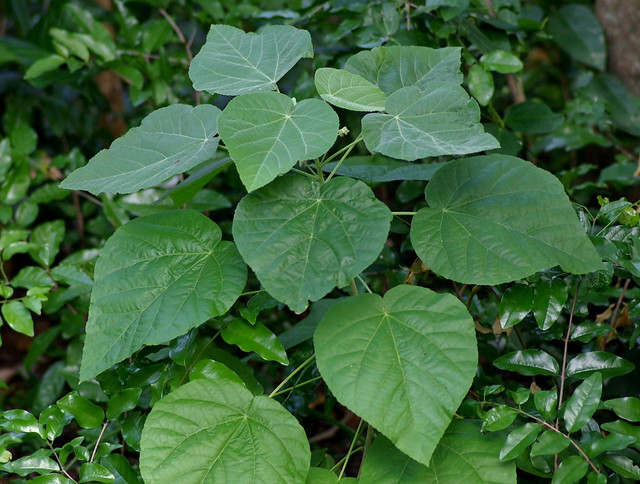
Bastardiopsis eggersii – Jost Van Dyke's Indian-Mallow

![]() |
| Plants in my garden flower in early spring (January in south Florida). The flowers are tiny but are attractive to bees and are rather pretty when examined closely. |
Sunday, November 7, 2010
Asclepias curtissii
Curtiss's milkweed is a state-listed endangered species with specialized habitat requirements. It is found almost exclusively in scrub habitats where it tends to favor areas of pure sand with very little vegetation. It is remarkable in that it is one of the few plants that readily colonizes areas of pure sand at the edges of stable blowouts.
Geologically, a blowout is a depression in a sandy habitat caused by strong winds. Blowouts get their start when some disturbance, such as fire, extended drought, off-road vehicles, or human or animal foot traffic, results in the loss of protective vegetation. Sometimes, a positive feedback cycle forms where the blowout causes plants to die along its periphery, this makes the blowout bigger, and this in turn causes more plants to die, resulting in an ever expanding area of pure sand devoid of any vegetation.
Curtiss's milkweed occurs as a native plant only in the State of Florida. Within the state, it has a wide range and has been recorded in many counties from Clay County in the north to Broward and Collier counties in the south; however, it is endangered in spite of its wide distribution because of its exacting habitat requirements and habitat loss.
© 2010 Rufino Osorio.
Thursday, November 4, 2010
Peperomia humilis
Florida is the only state in the continental United States with native Peperomia species. Eight occur in Florida, two non-native species and six native species. Of the native species, all but one are rare, state-listed endangered plants (Wunderlin & Hansen 2008). Peperomia humilis A. Dietrich is the Florida native species with the greatest geographic range and it occurs in 12 counties from Duval County in the north to Collier and Miami-Dade counties in the south.
Peperomia humilis is fairly common in cultivation among Florida native plant gardeners and is moderately easy to grow. Optimum requirements are a brightly lit but shady spot in well-drained soil that does not dry out excessively. Failure to successfully cultivate this plant is most commonly due to overwatering it or planting it in poorly drained soils. As with most peperomias, it makes an ideal houseplant so long as the soil is allowed to become almost completely, but not quite, dry between waterings and it is not located in a very hot, dry spot.
References:
- Wunderlin, R. P., and B. F. Hansen. 2008. Atlas of Florida Vascular Plants. Institute for Systematic Botany, University of South Florida, Tampa. Internet
© 2010 Rufino Osorio.
Sunday, August 29, 2010
Harrisia fragrans – Fragrant Prickly-Apple
Harrisia fragrans is a rare, federally-listed endangered cactus of sandy coastal areas and recorded from Volusia, Brevard, Indian River, and St. Lucie counties along the east coast of peninsular Florida. It is now extremely rare in the wild and it has been reduced to approximately 320 plants in St. Lucie County (Possley 2010), with all other occurrences having been eliminated as a result of habitat destruction. The prospects for this plant appear dim since the wild populations show high death rates for mature plants and low rates of recruitment and establishment for seedlings (Rae & Ebert 2002).
The plant is characterized by narrowly columnar stems with 10–12 ribs and growing 3–5 meters (9.8–16.4 feet) long. Such lengths appear to be the result of plants trying to grow above the surrounding vegetation since cultivated plants in full sun tend to remain much shorter. Young shoots are very showy as a result of the bright yellow spines that contrast beautifully with the dark green stems. The spines darken as they age but even on very old stems, the spines will usually retain yellow tips.
Disproportionately large, fragrant, white flowers are produced in late spring and these quickly develop into huge, rounded, orange-red fruits that take several months to ripen. The fruits are sparsely covered with small scales and are filled with numerous seeds embedded in a mildly sweet white flesh with a pleasing flavor. Fruits can be cut in half and the flesh and seeds scooped out and eaten in the same manner as kiwi fruits and, like kiwi fruits, the flavor can be enhanced by adding a squeeze or two of lime. Plants are equally ornamental in flower and in fruit and the latter are "a great attraction as food for birds, many of whom are ravenously fond of the seeds" (Small 1932 quoted in Parfitt & Gibson 2003).
Harrisia fragrans is very easily cultivated from seeds and young plants about two years old and only 30.5 centimeters (12 inches) tall will readily flower and set fruit in a small pot. Plants are also easily propagated by stem cuttings that have had their cut ends allowed to dry for a day or two and then inserted into sandy soil. If one has the room, it should be grown in large groups where quantities of large white flowers will present a very attractive sight and many fruits can be produced, to the gastronomic delight of the gardener, assorted mammals, and birds.
Harrisia fragrans, under the name Cereus eriophorus var. fragrans, was formerly treated as a variety of Harrisia eriophorus; however, the latter is now regarded as an exclusively Caribbean species that differs in its 8–9-ribbed stems and longer, black-tipped spines (Parfitt & Gibson 2003).
References
- Britton, N.L. and J.N. Rose. 1920. The Cactaceae: Descriptions and Illustrations of the Cactus Family. Volume II. Washington, D.C.: Carnegie Institution of Washington Publication No. 248. Internet
- Parfitt, B.D. and A.C. Gibson. 2003. Harrisia. pp. 152–153. In Flora of North America Editorial Committee (eds.) Flora of North America: Volume 4. New York: Oxford University Press. Internet
- Possley, J. 2010. CPC National Collection Plant Profile: Cereus eriophorus var. fragrans. St. Louis: Center for Plant Conservation. Internet
- Rae, J.G. and T.A. Ebert. 2002. Demography of the Endangered Fragrant Prickly Apple Cactus, Harrisia fragrans [abstract]. International Journal of Plant Sciences 163(4): 631–640. Internet
- Small, J. K. 1932. Harrisia fragrans—fragrant prickly-apple. Addisonia 17: 29–30.

A plant that survived hurricanes Frances and Jeanne in 2004 produces new shoots in the spring of 2005.
Image published prior to 1923 (Britton & Rose) and now in the public domain. Text © 2010 Rufino Osorio.