Sunday, January 30, 2011

Winding Waters Natural Area

Steve Pisano leads a field trip to Winding Waters Natural Area

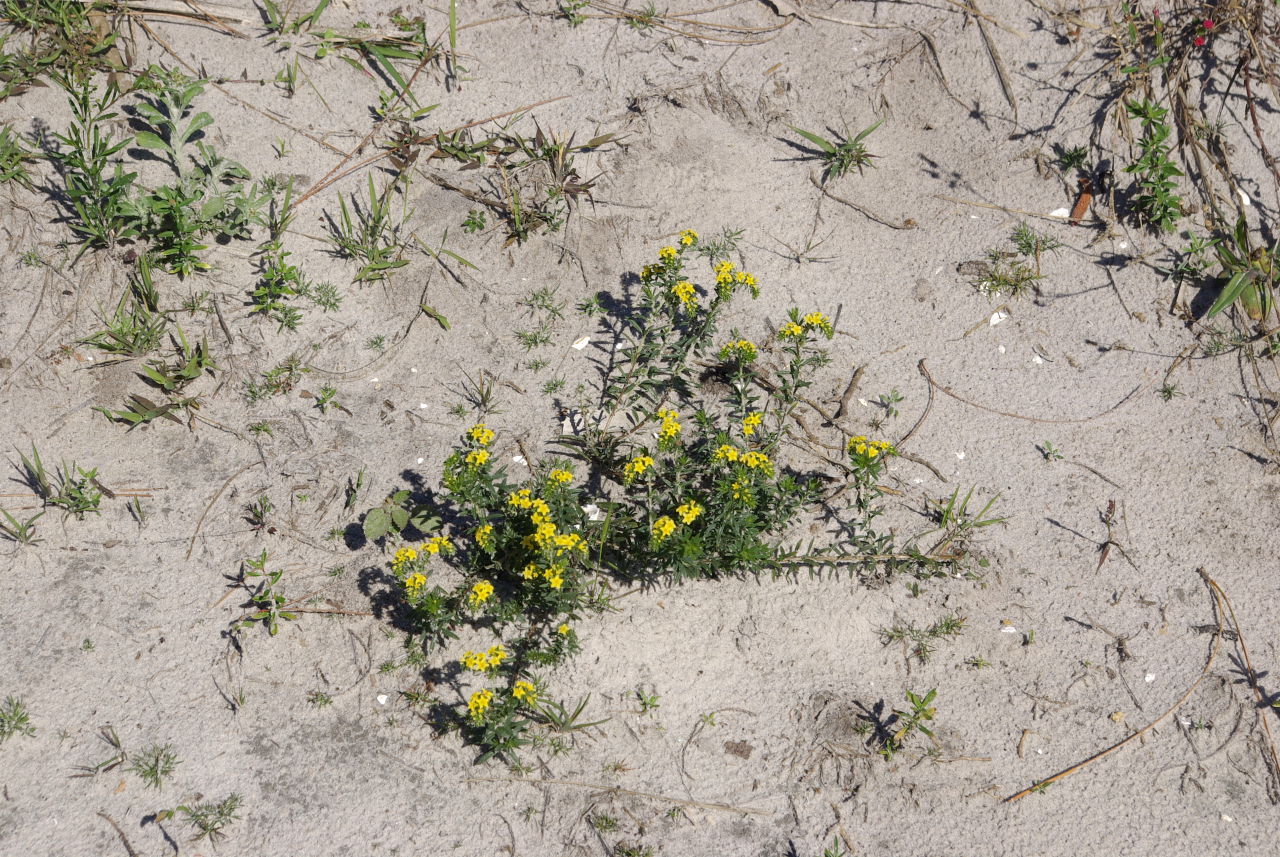
On January 29, 2011, approximately 15 members of the Palm Beach Chapter of FNPS went on a field trip to the Winding Waters Natural Area, a 550-acre preserve that protects large areas of pine flatwoods, cypress forests, and marshes, as well as constructed ponds and wetlands. The field trip was lead by Steve Pisano, an Environmental Analyst with the Palm Beach County Department of Environmental Resource Management. Following are a few images from our field trip.

Steve Pisano leads a field trip to Winding Waters Natural Area

Winding Waters Natural Area

Winding Waters Natural Area

Euthamia caroliniana

Heliotropium polyphyllum

Pluchea carolinensis

Dichanthelium species

Gamochaeta pensylvanica


© 2011 Rufino Osorio.

Sunday, January 23, 2011

Pelargonium Caliente® Fire '09

Pelargonium Caliente Fire

Caliente® is a series of Pelargonium hybrids developed by Syngenta for increased heat tolerance. The plants have great hybrid vigor, which results from crossing zonal pelargoniums (Pelargonium × hortorum) with ivy pelargoniums (Pelargonium peltatum). Although touted on various web sites as suitable for the deep south, the Syngenta web site lists the heat tolerance of the Caliente® series as moderate, that is, 70–80° F (21–27° C), which does not appear to be much, or at all, greater than the heat tolerance of typical zonal pelargoniums. Perhaps the plants are being compared, not to zonal pelargoniums, but to regal pelargoniums (Pelargonium × domesticum) and to regular ivy pelargoniums (Pelargonium peltatum), both of which tend to have low heat tolerance. In any event, the Caliente® series can be expected to burn out during south Florida's torrid summers; however, for reasons that are not too clear, when grown in pots the plants tend to be much more heat tolerant than if planted in the ground, especially if protected from the intense afternoon sun.

Fire '09 is a Caliente® cultivar characterized by very dark green leaves and intense tomato-red flowers. Unfortunately, it is all but impossible to capture the true color of its flowers with either film or digital cameras and the above image has an orange tone that is completely lacking when the flowers are viewed by the human eye. Fire '09 is listed by Syngenta as PPAF (plant patent applied for), which precludes its vegetative propagation without a license from Syngenta.


© 2011 Rufino Osorio.

Monday, January 17, 2011

Scutellaria arenicola

Scutellaria arenicola

Scutellaria arenicola was named by John Kunkel Small in the Bulletin of the Torrey Botanical Club in 1898. Over 100 years have elapsed since then and it is still essentially unknown in cultivation in spite of being nearly pest-free, easily grown, and bearing masses of large, colorful flowers. In nature, it occurs in sandhills and scrub and this might account for its rarity in home gardens. Plants from these habitats are often difficult for home gardeners to maintain unless the garden has very deep, sandy soil; however, that is not the case with Scutellaria arenicola and it readily adapts to a wide variety of garden conditions so long as it is provided with full sun and is not shaded by taller plants.

Scutellaria arenicola

Plants die down to basal rosettes in the autumn and spend the winter in a more or less dormant state. With the arrival of warm weather in the spring, the rosettes take on a striking and distinctive deep burgundy color. Even if it never flowered, it would be worth growing for this beautiful foliage display. With spring rains, the stems rapidly elongate to 1—1.5 feet (30—45 centimeters) tall and produce sparsely branched spikes of large, dark lavender-blue flowers accented with a contrasting white throat. In the wild, stressful conditions usually result in plants that consist of a single rosette bearing a solitary spike of flowers. But with richer soil and more consistent watering, garden plants form many rosettes that bear large masses of flowers. Its horticultural uses are varied but it is perhaps best suited as a groundcover in sunny areas and as an accent plant in perennial flower borders, wildflower gardens, and cottage gardens. It may also be profitably used to provide color in herb gardens since it combines well with traditional herb garden plants. And, of course, it may be grown as a potted plant.

Scutellaria arenicola

Fortunately, propagation is as easy as its cultivation and Scutellaria arenicola may be readily propagated by dividing the clumps of rosettes, by rooting cuttings, or by seeds. Every flower seems to produce seeds and, if allowed to do so, a single plant will form large colonies that become a carpet of lavender-blue in the spring. Although it is a long-lived perennial, plants will flower in a few months from seeds.

As is the case with all plants, Scutellaria arenicola does have a few drawbacks. Although it will tolerate surprisingly wet soil, the soil must be very well drained and it will not do well in an area where there is standing water after heavy rains. As mentioned above, it demands full sun and, although it will survive in the shade, it will bear few or no flowers. Although Scutellaria arenicola flowers throughout the summer and autumn, another drawback is that the flower buds produced during hot summer and autumn weather usually go directly to seed and do not produce the large, showy flowers.

To my surprise, Scutellaria arenicola has relatively few wildlife benefits and, although the flowers show all the hallmarks of being adapted for pollination by bees, I have not observed an insect visiting the flowers in over 15 years of growing the plant. Likewise, nothing seems to eat the foliage although occasionally plants stressed by extended drought will be attacked by non-native scale insects. However, cultivated plants can form rather large colonies that can cover many square feet of ground and as such they provide shelter for insects, spiders, lizards, and other small animals.

Scutellaria arenicola is native only to parts of Georgia and to Florida, where it occurs from Columbia County in north Florida to Highlands County in central Florida. Additional records, separate from its principal range in central Florida, have been reported from Lee and Collier counties in southwestern Florida.


© 2011 Rufino Osorio.

Tuesday, January 11, 2011

Tuscany

Domestic Cat; House Cat

Domestic Cat; House Cat

Domestic Cat; House Cat


© 2011 Rufino Osorio.

Sunday, December 12, 2010

Graptopetalum

Graptopetalum

The plant pictured above is a beautifully grown succulent in the stonecrop family (Crassulaceae) at Abell's Nursery in Lake Worth, Florida. It is probably a hybrid with at least one parent being a Graptopetalum, a genus native to North America, where it ranges from Arizona to Oaxaca, Mexico.

The plant in the upper left corner of the photograph is Portulacaria afra, a member of the portulaca family (Portulacaceae) native to Africa. It is represented by two distinct forms, the typical green-leaved form and a form with variegated leaves.

© 2010 Rufino Osorio.

Saturday, December 11, 2010

Tithonia rotundifolia

Tithonia rotundifolia

Tithonia rotundifolia (Miller) S.F. Blake is an annual native to Mexico and Central America. Depending on the plant's genetics and growing conditions, it grows 3–6 feet tall. It is grown for its large, brilliant orange-red daisies, these being used as cut flowers or as a source of nectar in butterfly gardens. The plant is a serious invasive pest plant in some countries but it is not regarded as invasive in the United States, where it has sparingly escaped cultivation in Florida and Louisiana.

In my garden, plants of Tithonia rotundifolia were severely attacked by various insect pests and a plant virus almost as soon as they germinated and the severely weakened plants barely survived long enough for me to obtain the photograph above before promptly dying without setting seeds. In view of this plant's invasive tendencies in various tropical and subtropical regions, I did not consider its early demise in my garden unfortunate.

© 2010 Rufino Osorio.

Stokesia laevis – Stokes-Aster

Stokesia laevis, stokes-aster

Stokesia laevis (J. Hill) Greene is a perennial wildflower in the daisy family native to Alabama, Florida, Georgia, Louisiana, Mississippi, and South Carolina. It grows 1–2 feet tall and is distinctive for its large lavender-blue daisies which are borne in June–September. In nature it occurs in woodland openings, bogs, and wet flatwoods and savannas; however, it readily adapts to garden conditions in light shade to full sun in sites with rich, moist soil. Plants slowly form rather large clumps and it is easily propagated by division of the clumps. It may also be propagated from root cuttings and from seeds, which do not require any special pretreatments for germination. There are reports that seeds of stokes-aster may germinate irregularly over a long period of time (Gettys & Werner 2001); however, in one experiment, 78% of 985 seeds germinated within 42 days (ibid).

Stokesia laevis, stokes-aster

References:

  • Gettys, L.A. and D.J. Werner. 2001. Stratification unnecessary for germination of seeds of stokes aster [Stokesia laevis (J. Hill) Greene]. Proceedings of the Florida State Horticultural Society 114:250–251. PDF


© 2010 Rufino Osorio.

Thursday, November 11, 2010

Lindernia microcalyx

Lindernia microcalyx Is not native to the United States. It is included here as an aid to identification and not to promote its cultivation.

Lindernia microcalyx

Lindernia microcalyx Pennell & Stehl is an annual or short-lived perennial native to the tropics of North and South America. I found it growing in a somewhat disturbed wet area in Martin County many years ago; however, I did not send voucher specimens to any herbariums so it is not officially listed as an introduced species occurring outside of cultivation in Florida. It is distressingly similar to the native Lindernia grandiflora in its sprawling stems that root wherever they touch moist soil, in its rounded leaves, and showy flowers. It differs in having (1) minutely glandular hairy sepals; (2) thickened pedicels, often noticeably thicker just below the seed capsule; (3) flowers self-fertile with every flower setting a seed capsule, even in isolated plants; and (4) subglobose seed capsules about 2 millimeters long. In contrast, the native Lindernia grandiflora has non-glandular, hairless sepals; filiform pedicels of uniform thickness; usually self-sterile flowers with isolated, solitary plants rarely setting seeds; and seed capsules 4–5 millimeters long.


© 2010 Rufino Osorio.

Monday, November 8, 2010

Ipomoea ternifolia var. leptotoma

Ipomoea ternifolia var. leptotoma

Ipomoea ternifolia var. leptotoma

Ipomoea ternifolia var. leptotoma is a desert ephemeral native to Arizona and Mexico. It is horticulturally distinctive in its delicate, lacy leaves, which are divided into 3 or 5 narrow lobes; the rapidity with which it produces abundant flowers; and the striking violet-lavender color of its relatively large flowers.

Desert ephemerals are annuals that are adapted to brief periods of heavy rains and they are remarkable for the speed with which they flower and set seeds. Ipomoea ternifolia var. leptotoma, for example, will flower within a few weeks of germination. As the desert soil dries after heavy rains, the plant begins to die but even dying plants that have lost all their leaves will continue to produce flowers and set seeds so long as the stems remain green. Since desert ephemerals have no water-storing succulent roots, stems, or leaves, there is great urgency to set seeds before the last vestige of moisture is gone and extended hot and dry conditions return to the desert. The plants then lie dormant, in the form of seeds, awaiting the next period of heavy rain.


© 2010 Rufino Osorio.

Sunday, November 7, 2010

Glycosmis parviflora

Warning: Glycosmis parviflora has a very high potential of becoming an invasive pest plant. It should not be cultivated in the warm-temperate, subtropical, or tropical regions of the United States and all occurrences outside of cultivation should be promptly destroyed. It is included here only as an aid to identification and not to promote its cultivation in any way whatsoever.

Glycosmis parviflora
Young potted plant only 19 inches (0.5 meters) tall but freely flowering and fruiting.

Glycosmis is a genus of approximately 50 species of unarmed shrubs or trees in the citrus family (Rutaceae) native to eastern, southern, and southeastern Asia, with a few species also in Australia. The genus can be distinguished from all other members of the citrus family in Florida, both native and introduced, by the following combination of traits: (1) plant unarmed and lacking spines; (2) fruit a fleshy berry; and (3) terminal and axillary buds, and often the young inflorescences, covered with tiny rust-colored hairs or scales.

Glycosmis parviflora
Close-up of an axillary bud covered with tiny rust-colored hairs.

One species, Glycosmis parviflora (Sims) Little, has become established outside of cultivation in the United States, where it has been recorded from Broward and Miami-Dade counties and the Monroe County keys. Originally native to China, Taiwan, Japan, Myanmar, and northeast Vietnam (Dianxiang & Hartley 2008), it was introduced into the United States as a curiosity of ethnobotanical interest and as possible genetic material in the breeding of citrus fruits (Wiersema & León 1999:243). Plants identical to Glycosmis parviflora appear in a wide variety of internet sites under the name Glycosmis pentaphylla; however, every instance of Glycosmis pentaphylla that I have seen on the internet shows images of a plant with leaflets that have entire or slightly wavy margins, which are typical of Glycosmis parviflora. In contrast, Dianxiang & Hartley (2008) state that the leaflets of Glycosmis pentaphylla have toothed (serrated) margins.

Glycosmis parviflora
The species epithet, parviflora, means tiny flowers.

Glycosmis parviflora displays the following attributes that are associated with invasiveness: (1) Young plants are shade tolerant; (2) plants begin flowering and fruiting when less than two feet tall and less than three years of age; (3) plants are self-fertile and abundantly produce fruit, even when growing in isolation; (4) in warm regions, flowers and fruits are borne throughout the year; (5) relatively pest free; and (6) fruit dispersed by vertebrates (birds and mammals). Although it is not presently listed as an invasive plant, it should be watched closely and all occurrences outside of cultivation should be promptly destroyed.

References:

  • Dianxiang, Z. and T.G. Hartley. 2008. In Z.Y. Wu, P.H. Raven, and D.Y. Hong (eds.) Flora of China: Volume 11. Science Press (Beijing) and Missouri Botanical Garden (St. Louis). Internet PDF
  • Wiersema, J.H. and B. León. 1999. World Economic Plants: A Standard Reference. Boca Raton: CRC Press.


© 2010 Rufino Osorio.